
The Contagion® editorial staff will be providing exclusive written and video coverage from IDWeek 2019.
The Contagion® editorial staff will be providing exclusive written and video coverage from IDWeek 2019.
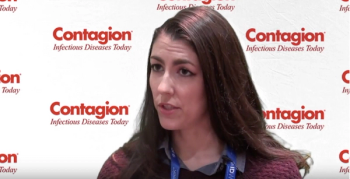
Emily Ricotta, PhD, ScM, highlights the increase in non-albicans candidiasis, which tends to be more antibiotic resistan,t in both bloodstream and sterile-site infections.

Melvin Weinstein MD, discusses the emerging technologies that will advance the field of blood culture testing.
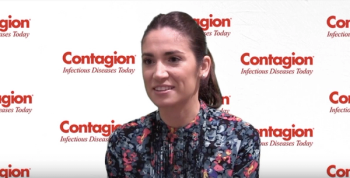
Julie Ann Justo, PharmD, discusses the myths associated with penicillin allergies and why it is important to determine a patient's true penicillin allergy-status.
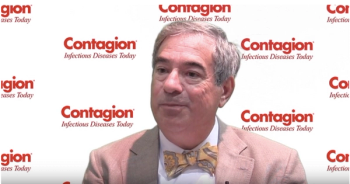
Kenneth Sherman, MD, discusses hepatitis B infections in immunocompromised patients and what clinicians should expect to see in the future for hepatitis B treatment.

As clinicians and health care executives work to strike a balance between reducing costs and improving clinical outcomes, the importance of sepsis identification and treatment cannot be underscored enough, and starts with evaluating current practices for infection management.

Brad Spellberg, MD, highlights research that indicate shorter courses of therapy are safer and as effective as longer ones, as well as the importance of randomized controlled trials.
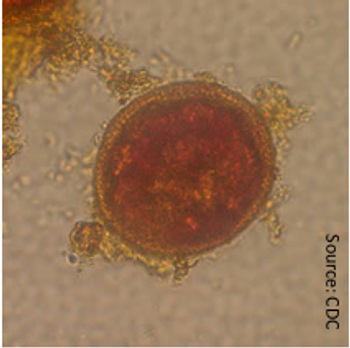
Highest amounts of Toxocara egg contamination were in areas that could contain food droppings or animal waste.

Data from a pooled analysis of the REVIVE-1 and 2 studies found iclaprim to be non-inferior to vancomycin based on earl clinical response in patients with wound infections.

The phase 3 CAPSTONE-2 trial shows treatment with baloxavir marboxil significantly reduced the time to improvement of flu symptoms compared with placebo.
ID Week 2018 was held October 2-7, 2018, in San Francisco, California. The conference featured results of new studies on a variety of infectious disease topics as well as advancements being made in the field. Here are 5 key takeaways from the meeting.

A study of more than 500 outpatient clinics reveals a new view of antibiotic overprescribing practices in the United States.
We sat down with several infectious disease experts to learn more about their research and asked them to share what they’re taking home from ID Week 2018.
Approximately 10% of US patients report having an allergic relation to penicillin, yet only 1% of the population are truly allergic.

Cristen Whittaker, PharmD, explains the findings of an analysis that compared length of stay, readmission, and costs in patients with ABSSSIs who received oritavancin or vancomycin.

An eVLP cytomegalovirus (CMV) vaccine was found to be safe and immunogenic at very low doses in healthy seronegative adults.

Jason Pogue, PharmD, BCPS-AQID, discusses the need for real-world data to support Ceftolozane/tazobactam and shares the findings of his comparative study on using the regimen to treat MDR/XDR Pseudomonas aeruginosa.

Taking a closer look at the infectious disease risks posed by transplantation and what the future might have in store as the scope of transplantation expands.

Keith Kaye, MD, presented the analysis of the RESTORE-IMI 1 phase 3 trial which evaluated imipenem/cilastatin/relebactam versus imipenem/cilastatin plus colistin.
Kenneth E. Sherman, MD discusses the zoonotic hepatitis E virus and about the first reported case of rat-to-human transmission.

Melvin Weinstein, MD, discusses the current and emerging technologies for the laboratory diagnosis of bloodstream infections.

Roy Chemaly, MD, MPH discusses the findings of the phase 2 trial evaluating DAS181 for the treatment of parainfluenza virus lower respiratory tract infections in immunocompromised patients.

The stage may finally be set for the phage therapy era for recalcitrant bacterial infections.

Julie Ann Justo, PharmD, MS, BCPS-AQ ID, shares takeaways from her presentation on combination therapy for gram-negative agents at the 2018 SIDP Annual Meeting.

Efforts such as improved indication documentation and antimicrobial stewardship involvement may improve patient outcomes in some patients who are on outpatient parenteral antimicrobial therapy (OPAT) for ease of administration (EOA) that are readmitted to the hospital.

New software to facilitate prior authorization helped streamline the approval process and increase antimicrobial use tracking at the Hospital of the University of Pennsylvania.

Kenneth Sherman, MD, discusses current trends in the treatment of hepatitis B in immunocompromised patients and highlights research exploring treatment options for patients coinfected with HIV.

Letermovir found to prevent clinically significant CMV infection in HCT patients with CMV DNA when compared to placebo in recent phase 3 trial.

A retrospective study evaluates ceftolozane/tazobactam in a large database of US hospitals to determine real-world patterns and outcomes associated with the treatment.

The combination of daptomycin plus fosfomycin was more effective than daptomycin alone for treating patients with MRSA bacteremia.