Pruthvi Patel, MD, MPH, discusses how she is integrating hepatitis C EMR prompts at her institution as well as their innovative community outreach with educators to get more people into the care continuum.

Pruthvi Patel, MD, MPH, discusses how she is integrating hepatitis C EMR prompts at her institution as well as their innovative community outreach with educators to get more people into the care continuum.

In the second episode with Jason M. Goldman, MD, MACP, immediate past president of the American College of Physicians, he discusses the federal government's attempts to suppress studies on vaccine data and how it continues the ongoing antivaccine ideology with further mis- and disinformation.

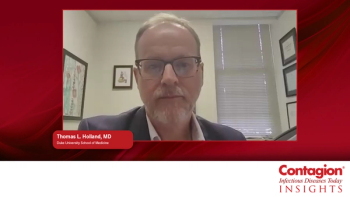
Robert H. Hopkins Jr, MD, medical director of the National Foundation for Infectious Diseases, offers commentary about what changing the vaccine committee’s charter means from a functional standpoint and how it affects public health by moving away from vaccines as a prevention strategy.

Jason M. Goldman, MD, MACP, immediate past president of the American College of Physicians, offers insights on what the changing Advisory Committee on Immunization Practices charter means and legal steps the college is taking to prevent the federal government’s attempt to reshape the group and vaccine policy in the US.

Jonathan Batchelder, PhD, provides insights around his research that showed that Staphylococcus aureus can survive fluoroquinolone treatment under nutrient-limited conditions even without key DNA repair proteins, pointing to alternative survival pathways and implications for future therapies.

In the third part of our conversation with the Peggy Lillis Foundation’s CEO Christian Lillis, he says insurance restrictions are forcing people with C diff to endure inferior treatments and repeated infections raising both human suffering and long-term healthcare costs.

AMR Action Fund CEO Henry Skinner, PhD, MBE, provides insights around the legislation including its implementation challenges which may be slowing its path to passage despite bipartisan support in Congress as well as growing recognition of the global antimicrobial resistance crisis.

Lily Li, MD, PhD, MBA, discusses factors for increasing incidence rates including low awareness, asymptomatic spread, and gaps in testing and care access, and strategies to increase early. She also provides a brief overview for some of the testing options for the infectious disease.

In the final episode of the short series, Akhila Kosaraju, MD, talks about changing the development paradigm and moving away from reengineering molecules of existing antibiotic classes and towards creating new ones.

Madeline McCrary, MD, explains her institution’s program as a novel way to get new mothers diagnosed and given their full-course of treatment when they are still in the hospital.

In the second episode of this short series, Akhila Kosaraju, MD, talks about how Phare Bio and Basilea Pharmaceuticals are partnering to develop antimicrobials taking them from AI molecules to clinical trials.

A new study shows that strain-level surveillance of Staphylococcus aureus in NICUs can identify hidden transmission pathways and enable targeted interventions to reduce serious infections in vulnerable newborns.

Akhila Kosaraju, MD, provides insights around how AI is moving towards an accelerated pace of antimicrobial development in hopes of getting molecules into clinical trials and approved much faster than the current paradigm.

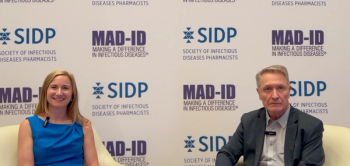
The inaugural MAD-ID and SIDP 2026 meeting aims to provide new infectious diseases education offerings, dynamic speakers, and strong networking opportunities for younger clinicians. SIDP President Erin McCreary, PharmD, BCIDP, FIDSA, offers some insights around the upcoming event.

Early adoption of genomic surveillance and rigorous infection prevention protocols has enabled one health system to prevent in-hospital outbreaks of Candida auris despite rising cases nationwide. Shaun Yang, PhD, D(ABMM), FIDSA, MLS(ASCP) provides insights on how his institution is handling testing for this problematic fungal infection.

Kyle Rodino, PhD, D(ABMM), discusses the incidence rates of Lyme disease, the emergence of mosquito-borne disease, and diagnostics including the tried-and-true tests and the emergence of metagenomic next-generation sequencing (mNGS) and AI-assisted microscopy and their roles in detecting organisms and pathogens.

In the second part of our conversation with the Peggy Lillis Foundation’s CEO Christian Lillis, he discusses the agenda for their annual visit to Capitol Hill to advocate for the most significant issues affecting people with C diff to members of Congress.

Peggy Lillis Foundation’s annual event will have a number of speakers addressing these Clostridioides difficile (C diff)-related issues as they look to draw awareness to shortcomings in both areas as well as others. The organization's CEO Christian John Lillis offers some insights around the upcoming meeting.

Stakeholders offer some insights around the challenges and potential solutions including a federal investment in the field.

Patricia A Stinchfield, RN, MS, CPNP, discusses her medical experience caring for patients with it, and what fellow clinicians and the general public should know about less-discussed details and potential complications.

Chloe Orkin, MD, MSc, discusses the takeaways of the ARTISTRY-1 phase 3 study, including its efficacy and safety profile and the potential benefits of a single-tablet regimen in this patient population.

IDSA’s Amanda Jezek provides the latest update on the legislative bill, including some of its features, its methodology for assigning antimicrobials to the subscription model, and how anyone can advocate for the bill with Congress.

In the second installment of a 2-part interview, Jacinda Abdul-Mutakabbir, PharmD, MPH, offers some novel findings around UTI treatment failure associated with levels of education and insurance payers.

Jacinda Abdul-Mutakabbir, PharmD, MPH, discusses her research in this area and how to potentially mitigate these treatment disparities.

Emory’s Jill Morgan, RN, BSN, discusses what they do after removal of personal protective equipment (PPE) and if a provider has experienced a potential exposure to a high-consequence infectious disease.

Sharon Carrasco DNP, APRN, ACNS-BC, ANP-C, CEN, FAEN, FAAN, FNAP, discusses her approach to training for these care scenarios.

Early international experience and evolving real-world data indicate that the new MBL-targeting regimen shows strong potential for US clinicians, despite expected resistance patterns and still-developing evidence.

Clinicians should view the open-label data as promising but preliminary, with post-marketing evidence expected to play a critical role in defining its place in guidelines for treating MBL-producing, multidrug-resistant infections.

Emory's Gavin Harris, MD, talks about taking care of patients with high-consequence infectious diseases, and considerations for not only their care, but their families. He also discusses working with other healthcare facilities around COVID-19 care and educating them through Emory's ECHO program on new and existing threats.

Aztreonam-avibactam achieved noninferior clinical cure rates and a comparable safety profile to meropenem/colistin, even amid a high proportion of carbapenemase-producing pathogens.