









































































































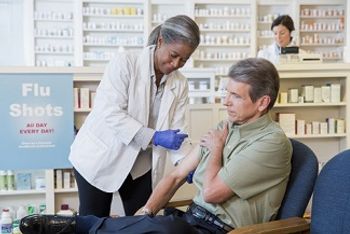
Influenza vaccines may be less effective in older adults due to a lack of antibody diversity, a new study suggests.
Influenza vaccines may be less effective in older adults due to a lack of antibody diversity, a new study suggests.

Although influenza A H1N1 continues to dominate the current flu season in the US, H3N2 viruses are on the rise in some parts of the country.

A computer simulation model developed by NYU investigators uses math to forecast influenza activity.

As flu activity remains elevated in all regions of the United States for the fifth week in a row, a new study quantifies the impact of flu vaccination last season.

Japanese researchers find a concerning resistance to a new antiviral flu medication.

Giving an influenza vaccine to hospitalized patients prior to discharge might also be the only opportunity to vaccinate those patients.

Mitsuru Toda, MS, PhD, discusses research that discovered 94 patients who had invasive aspergillosis with influenza.

The FDA has approved the use of the 0.5 mL dose of Fluzone Quadrivalent influenza vaccine to include children age 6 through 35 months.

In a multi-institution collaboration assessing 22 influenza forecasting models, the majority of models consistently showed higher accuracy than historical baseline models.

CDC has released mid-season estimates indicating approximately 84,000 Americans have been hospitalized for the influenza so far this season.

A new method assessing the influenza A strain provides investigators with a more detailed look at influenza viruses.

In 2017, lower respiratory tract infections linked with influenza were responsible for an estimated 145,000 deaths worldwide.
Updated guidelines will hopefully spur more clinicians to test for and treat influenza in people with symptoms whether they’re high risk or not.

With early season flu vaccination rates up from 2017-2018 early season rates, new pediatric influenza deaths around the country are prompting health officials to call for even higher vaccination rates.

Concerns over the influenza vaccine’s effectiveness and its side effects are causing many Americans to forego an influenza vaccine this season, despite the severity of the 2017-2018 Season.

People living with HIV should get a flu shot each year, according to experts.

Stay up-to-date on the latest infectious disease news by checking out our top 5 articles of the week.
A new survey has found that 34% of US parents are not planning to have their child vaccinated against influenza.

A new study explores the concept of an epidemic calendar, with new findings suggesting that all infectious disease outbreaks have a seasonal element.

The results of a new study suggest these immune-system organs may be more involved in the disease than originally thought.

A new study sheds light onto showerheads as a source for mycobacterial infections.
Investigators have found that children who received a flu shot in consecutive years did not see a decline in vaccine effectiveness.

Investigators have found the quadrivalent vaccination to be as effective as trivalent standard-dose, while the high-dose trivalent was found to be more effective than the trivalent standard-dose.
Keeping communities safe from potentially deadly viruses is everyone’s responsibility.

New outbreaks of rubella and troubling data on influenza highlight the importance of vaccination.