

Another prong in the battle against resistant Gram-negative infections is the addition of beta-lactamase inhibitors to restore or improve the activity of older carbapenems.
Another prong in the battle against resistant Gram-negative infections is the addition of beta-lactamase inhibitors to restore or improve the activity of older carbapenems.

Alan Gross, PharmD, discusses testing options for multidrug-resistant pneumonia.

Antimicrobial-resistant organisms, particularly Gram-negative bacteria, present a critical threat and a substantial burden.

Silvio Pitlik, MD, explains why he feels Lyme disease can make individuals obsessive.

In case you missed them, we've compiled the top 5 articles from this past week.

Silvia Munoz-Price, MD, PhD, calls for a clear delineation of the role of hospital epidemiologists.

Alan Gross, PharmD, postulates why one in four patients experienced treatment failure for community-acquired pneumonia in a recent study.

Viviane Boaventura, MD, MsC, PhD, discusses which arbovirus poses the greatest threat to Brazil.

At ID Week 2017, Dr. Laura Cooley, CDC, discussed the increasing number of Legionnaires’ cases in the United States, underscoring the need for stronger water management practices.

Prof. Francisco Veas, PhD, discusses the launch of a task force dedicated to gaining a better understanding of Lyme disease.

Silvia Munoz-Price, MD, PhD, calls for more microbiome research in order to ultimately improve patient care in hospitals.

Brinda Emu, MD, offers insight into the HIV monoclonal antibody ibalizumab.

Dr. Shibani Mukerji discusses how HIV affects the brain as part of a symposium at ID Week 2017.

Michael N. Dudley, PharmD, explains how VABOMERE was associated with a higher overall cure rate and lower mortality compared with the best available therapy in patients with CRE infections in a recent trial.

Monica Mahoney, PharmD, BCPS-AQ ID, explains the first-line empiric therapy for candidemia.

Ciara Kennedy, PhD, breaks down APX001, a new antifungal with a unique mechanism of action.

Magda Opsomer, MD, reveals who will benefit from the darunavir single-tablet HIV regimen.

Stay up-to-date on the latest infectious disease news by checking out our top 5 articles of the week.

Jessica Justman, MD, shares how the PHIA project is collecting HIV biomarkers in children.
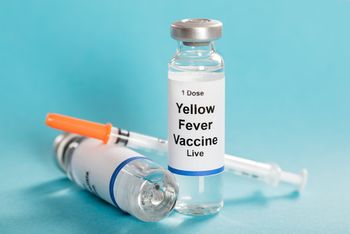
Dr. Daniel Lucey provided insight on past and current yellow fever outbreaks and vaccine shortages at ID Week 2017; he also cited the very real possibility of yellow fever hitting Asia.

Amanda Paschke, MD, MSCE, explains the advantage of administering a beta-lactam in combination with a beta-lactamase inhibitor.

Results from a randomized, double-blind, placebo-controlled trial show that letermovir protects from viral infection in CMV-seropositive individuals following allogeneic hematopoietic cell transplantation.

Evelyn J. Ellis-Grosse, PhD, chief scientific officer of Zavante Therapeutics, explains why Zavante Therapeutic’s fosfomycin is a unique, novel antimicrobial.

The ambitious goal of global elimination of the virus by 2030 will take buy-in from all major stakeholders, including the United States.

Presenters combed through the barrage of clinical trials to share those that could be practice-changing for clinicians.

Christopher McCoy, PharmD, shares the protocol for approaching patients who may have a beta-lactam allergy.

Prolonged antibiotic use opens the door to the development of antibiotic resistance, superinfections, and the risk of Clostridium difficile infections.

The message for clinicians is to be vigilant. Look for candidemia and C. difficile infection occurring together.

Sue Cammarata, MD, explains the advantages that delafloxcin has over other fluoroquinolones.

Using combination antifungal therapy for invasive mold diseases is still a grey area that remains to be supported by robust data and relies heavily on clinician assessment.