

The results of a new study have revealed that carbapenem resistance conferred by plasmids can be transferred among unrelated bacteria in the health care setting.
The results of a new study have revealed that carbapenem resistance conferred by plasmids can be transferred among unrelated bacteria in the health care setting.

Xingmin Sun, PhD, shares current progress on developing a vaccine for Clostridium difficile infection.

Xingmin Sun, PhD, discusses aspects that need to be considered before developing a vaccine for Clostridium difficile.

The pooled results have hammered home the promise of eravacycline for the treatment of patients with cIAIs who are colonized by drug-resistant bacteria.

Anne Schuchat, MD, provides some history and insights on CDC’s role in safeguarding public health when the microbial world collides with the human world.
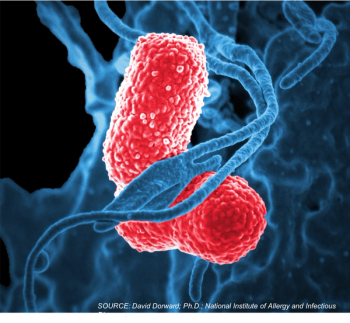
An extremely virulent (hypermucoviscous) strain of Klebsiella pneumoniae that is resistant to carbapenem and colistin has been isolated for the first time from a patient in the United States.

Sixty-nine out of the 70 colistin-resistant isolates had either mcr-1 and/or mcr-3 genes.

Chelsea Drennan, PharmD(c) explains why hospital length-of-stay might be shorter in patients who are on a fluoroquinolone versus a beta-lactam.

Empiric use of fluoroquinolones looks to be an alternate option for the treatment of gram-negative bloodstream infections when risk factors for antimicrobial resistance are not present.

Researchers from Vanderbilt University Medical Center determine the metabolic pathway that S aureus uses to survive in bones.

A prospective examination of over 2600 patients has not revealed a difference in their outcome compared with patients who are non-neutropenic when it comes to bacteremia caused by Staphylococcus aureus.

The opening session of ASM Microbe 2018 cuts a broad swath through the science of microbiology.

The drug met its primary endpoint of noninferiority to vancomycin at both 48 to 72 hours after drug initiation and test of cure.

Data from the IGNITE4 phase 3 trial supports the use of eravacycline for the treatment of complicated intra-abdominal infections (cIAI), including infections caused by pathogens resistant to other antibiotics.

New software unveiled last month suggests hospitals could make patient-specific predictions of antibiotic susceptibility.
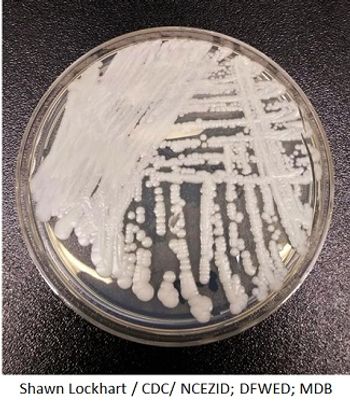
An outbreak of infections caused by the drug-resistant fungus, Candida auris, in one United Kingdom hospital has been linked to multi-use patient equipment.

Julia E. Szymczak, PhD, shares the results of her study which revealed that fear drives some clinicians to prescribe inappropriately.

This emotional drive carried throughout the continuum of the prescribing pathway, from initial prescription to stopping or de-escalating antibiotics.

In case you missed them, we've compiled the top five infectious disease articles from this past week.

Investigational beta-lacatamase inhibitor IMI/REL demonstrates a favorable overall response against certain imipenem-non-susceptible bacterial infections.

Dr. Gonzalo Bearman delves into the use of contact precautions for endemic pathogens such as MRSA and VRE and assesses the effectiveness of this approach.

Researchers present positive new data from multiple studies of VIBATIV at the 2018 ECCMID conference in Madrid, Spain.

If there are controlled substances at your facility, diversion is happening. What can be done to prevent future events?

Researchers present preliminary case series of confirmed cases of hepatitis A virus at Detroit Medical Center as Michigan struggles with ongoing outbreak.

According to recent research from Johns Hopkins Medicine, when it comes to making choices on appropriate antibiotic prescribing, outpatient providers are making the decision based on patient demand, not necessarily on what's actually appropriate for the condition.

Mike Kohut, PhD shares the results of his research that reveals providers are writing prescriptions for infections based largely on patient demand and not guideline recommendations.

Previously seen in Wisconsin in 2015-2016, Elizabethkingia seems to have made its way to the Empire state.

Emil Lesho, DO, FACP, FIDSA, FSHEA, explains what makes Elizabethkingia unique.

A recent survey explores prevention practices for Legionnaires’ disease and water management programs in health care facilities.

Dr. Thomas Sandora shares recent data on screening for asymptomatic carriage of Clostridium difficile and provides insight into what the preferred first-line treatment for the infection in children.