
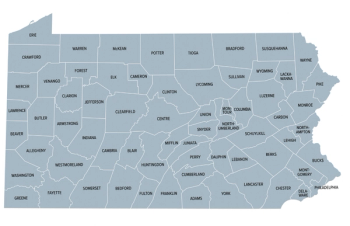
A 39-year-old unvaccinated Franklin County woman has died after a recent measles diagnosis. Nationally, numbers continue to increase and the US has passed 4,000 cases.
A 39-year-old unvaccinated Franklin County woman has died after a recent measles diagnosis. Nationally, numbers continue to increase and the US has passed 4,000 cases.
The National Foundation for Infectious Diseases (NFID) recently held its respiratory season kick-off, which included the release of its annual respiratory disease survey. This year, the survey revealed the gap between vaccine support and uptake. Robert Hopkins Jr, MD, medical director of NFID delves deeper into the findings of the survey and the vaccine uptake challenges associated with certain immunizations.
Detection of the virulent neurotropic fungus Cladophialophora bantiana in clinical samples, primarily CNS tissue, increased four-fold in the period from 2023 to 2025.
CDC reports 8,750 confirmed Bundibugyo virus cases and 4,208 deaths, making the DRC outbreak the second-largest Ebola outbreak on record.

Pritelivir (Hovilpri) healed all lesions by day 28 in 63% of immunocompromised adults with refractory HSV versus 34% with investigator's choice in the phase 3 PRIOH-1 trial.

CDC is continuing its investigation into 4 multistate Salmonella and E coli outbreaks, led by a 76-case alfalfa sprout cluster across 16 states and a recalled raw milk cheese.
The latest CDC numbers show a 5.0% increase of measles cases from week-to-week. The US total reached 4080 confirmed cases, 78% above all of 2025.
UTI guidelines are moving away from complicated or uncomplicated infections to localized or systemic classification terminologies. Guidelines author Zachary Nelson, PharmD, MPH, BCIDP, provides further insights on the changes including applying antibiograms, potential costs, and whether clinicians will embrace these new classifications.
Demonstrating a diagnostic test works is no longer enough. Clinicians and laboratories also need evidence on how to adopt it in everyday practice. Andrea Prinzi, PhD, MPH, SM(ASCP), explains how implementation science can help infectious disease and clinical microbiology teams turn evidence into routine care.

Kenya reported its first imported Bundibugyo Ebola death as the Democratic Republic of Congo (DRC) outbreak surpassed 8,600 confirmed cases and 4,148 deaths, with 896 patients hospitalized in isolation. Here is a report on the latest numbers as well as vaccine and therapeutic study updates.
With US measles cases nearing 3,900 this year and Pennsylvania reporting its fifth measles-related death, here is a review of how the virus spreads, how it is prevented and managed, and what severe disease looks like.
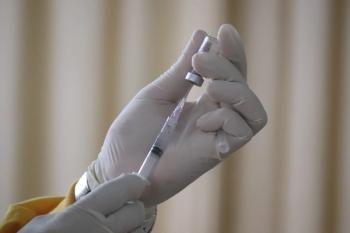
Vaxcyte's 31-valent pneumococcal conjugate vaccine candidate met every prespecified primary immunogenicity and safety endpoint against PCV20 and PCV21 in the OPUS-1 trial of 4,047 US adults.
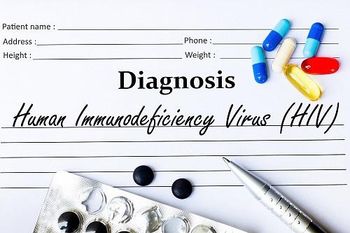
Long-acting cabotegravir plus rilpivirine (Cabenuva) achieved superior viral suppression vs daily oral antiretroviral therapy at 6months in treatment-experienced people with HIV and detectable viremia in the phase 3b CROWN trial.
FDA-cleared single-step immunoblot tests built on recombinant antigens from multiple Borrelia species detected nearly twice as many early Lyme disease cases as standard 2-tier testing. Joseph J. Burrascano Jr, MD, offers insights into what the new tests mean for clinicians.

Irkutsk anti-plague institute death prompts quarantines and conflicting official accounts.
A laboratory technician at a Siberian anti-plague institute has died of pneumonia of unknown cause, prompting quarantines and contact monitoring while Russian officials stop short of confirming plague.
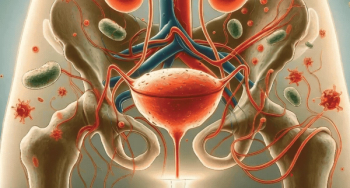
Recent urinary tract infection guideline updates from multiple international medical societies highlight evolving recommendations, including a major shift in classification, moving from anatomy- and risk factor–based definitions toward distinguishing localized from systemic infections.

A study finding clesrovimab comparable to palivizumab in protecting at-risk infants in their first RSV season was extended to demonstrate clesrovimab effective and well-tolerated when administered in their second season.
The latest CDC numbers show a 6.2% increase of measles cases from week-to-week. Last week there was a 5.4% increase in cases showing a continuing steady increase dictated by ongoing outbreaks across the US.
Lori Handy, MD, provides guidance in these areas, including presentation before rash onset, when patients should be considered for the inpatient setting, and what treatment looks like.
IDSA/ESCMID panel member Henry Chambers, MD, explains why the new S aureus bacteremia guidance replaces the complicated vs uncomplicated label with risk stratification, and how the statements are akin to the stages of cancer in guiding treatment decisions associated with this bacteremia.
Jason Pogue, PharmD, BCPS, BCIDP, contextualizes preliminary data looking at this trial and other extended-spectrum beta-lactamase (ESBL) studies, which reopens the debate around carbapenem-sparing treatment options.

Following World Rabies Day and a CDC health advisory on a 17% rise in exposure-related calls, Rodney E. Rohde, PhD, explains what the increase means, what people should do when they have an animal bite or scratch, and how clinicians should assess risk and administer post-exposure prophylaxis (PEP).
In the phase 3 LIBERTY study, the investigational monoclonal antibody, VYD2311, had significantly fewer adverse events than an mRNA COVID-19 vaccine, and it did not blunt vaccine-induced neutralizing titers when the two were given together.
The monoclonal antibody, Brelovitug, met the combined virologic and ALT response end point at week 24 in AZURE-1, with 56% response on 300 mg weekly and 45% on 900 mg every four weeks. The manufacturer projects a potential US launch in the fourth quarter of 2027.

IDSA and ESCMID released 7 consensus statements to assist in managing individuals with SAB. This review will focus on the adult patient population and additional information on pediatric population statements can be assessed in the guideline. Here is a closer look at Consensus Statement 2: Follow-up Blood Cultures.
With a significant increase in rabies exposures this year, Rodney Rohde, PhD, talks about seeking medical attention after animal interactions as well as clinical treatment when people have been bit or scratched.

The federal agency is investigating four active outbreaks linked to food and animal contact.
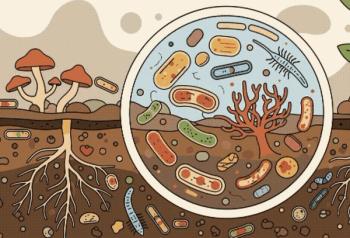
Widespread antimicrobial use disrupts vital microbial communities that regulate Earth’s biogeochemical cycles, driving antimicrobial resistance, worsening human and environmental health, and significantly contributing to climate change.
The latest CDC numbers show a 5.4% increase of measles cases from week-to-week. This year has already become the worst for the number of measles cases in the US since the disease was declared eliminated in 2000. With the start of respiratory virus season, case numbers are expected to continue to increase significantly.