



C. Difficile
Latest News
Advertisement
Latest Videos









CME Content
























































































































Advertisement
More News

A new study is the first to identify eosinophil counts as a predictor of outcomes in human patients.

New practical advice for the treatment of C difficile from SHEA advises against routine testing in NICU patients with diarrhea.

Nimish Patel, PharmD, PhD, discusses the updates to CDI management guidelines and the role of the pharmacists in providing education to physicians.

A new review examines previous studies and concludes that healthcare professionals could benefit from sensitivity training when dealing with patients who have HAIs.

Candidemia is a significant risk factor for C difficile infection in hospital patients.

Stay up-to-date on the latest infectious disease news by checking out our top 5 articles of the week.
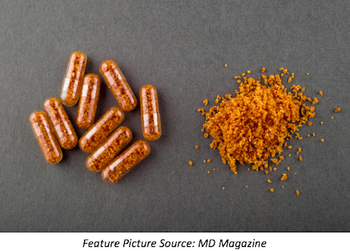
Fecal microbiota transplantation (FMT) is a widely accepted, safe, and effective treatment for recurrent Clostridium diffi­cile infection (rCDI), but does the cure endure?

Fidaxomicin and vancomycin are effective first-line therapies for Clostridium difficile, yet fidaxomicin may be more effective for achieving sustained symptomatic cure.

Dale N Gerding, MD, discusses the most recent changes to the guidelines of C difficile and the concerns of long-term effects of fecal microbiome transplants.
Alternative agents are often broader spectrum than ß-lactams, subjecting patients to collateral damage and subsequent selection for resistant organisms and Clostridium difficile.

The updated guidelines recommend targeting those with active infection and avoiding treatment of “carriers” of C difficile who are colonized but not symptomatic.

Stay up-to-date on the latest infectious disease news by checking out our top 5 articles of the week.

Xingmin Sun, PhD, shares current progress on developing a vaccine for Clostridium difficile infection.

Xingmin Sun, PhD, discusses aspects that need to be considered before developing a vaccine for Clostridium difficile.

McGill University researchers find that infection with C difficile might more likely be linked to infected than colonized donors.

A new study suggests that for simple PCR-based detection of C. diff, dry rectal swabs were an effective substitute to the use of stool samples.
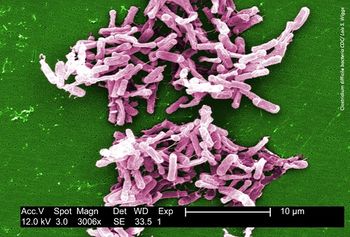
An economic evaluation finds that a bundled approach of stronger hand hygiene and improved environmental cleaning proved to be the best combination for reducing C. diff.

Dr. Thomas Sandora shares recent data on screening for asymptomatic carriage of Clostridium difficile and provides insight into what the preferred first-line treatment for the infection in children.
Stay up-to-date on the latest infectious disease news by checking out our top 5 articles of the week.
Given the impressive efficacy of fecal microbiota transplantation (FMT) on decreasing recurrence of Clostridium difficile infection (CDI), the next logical step is seeing how it works for hospitalized patients with CDI.

Study finds antibiotic use alters native gut bacteria that normally compete with C. diff for nutrients.
An analysis designed to assess infectious disease mortality in the United States between 1980 and 2014 revealed that the country has seen an increase in deaths caused by diarrheal diseases.

Maintaining consistent environmental cleaning and disinfection is critical to warding off emerging and re-emerging pathogens.

SMUCLA implements high-touch wipe down intervention to address the need for environmental disinfection of cancer patient care areas.

Dr. Richard Vickers, discusses C. difficile rates in the United Kingdom.
Advertisement
Advertisement
Trending on Contagion Live
1
Measles Update: February 6, 2026
2
Pritelivir Improves Outcomes in Immunocompromised Patients With Refractory Herpes Simplex Virus
3
HIV in the Black Community: Shifting from Stigma and Health Inequalities to Communication and Care Initiatives
4
Antibiotics Deconstructed: IV Fosfomycin
5