



HIV / AIDS
Latest News

Advertisement
Latest Videos



















































































































































Advertisement
More News
A recent study by the CDC found that HIV PrEP awareness and referrals are lower among Hispanic persons than non-Hispanic white persons.
The TakeMeHome program, a public-private partnership to distribute HIV self-test home kits to at-risk populations, is reaching at-risk individuals who weren’t otherwise accessing testing.

The HIV In-hospital Mortality Prediction (HIV-IMP) risk score showed good discrimination and calibration and may be useful in guiding clinical decision-making.

A recent study measured premature deaths among people with HIV by sex, race, and HIV risk factor.

This investigational therapy could be the first implantable form of PrEP.
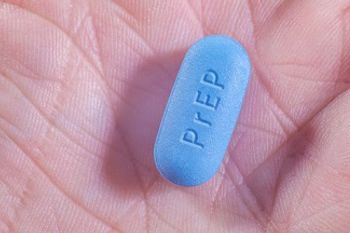
People who inject drugs are at high-risk for HIV infection, but very few are interested in PrEP prescriptions.

If the company gets approval it would be the first dispersible single tablet regimen containing dolutegravir.

As more agents expand the capability and variety of PrEP options, investigators consider what questions remain about the drug class.

Following the approval of cabotegravir-rilpivirine earlier this year, experts are looking forward to an expansion of the drug class for HIV.

The combination therapy's non-inferior efficacy to heavier TAF regimens may indicate a greater embrace of 2-drug regimens for people living with HIV.

A conversation in consideration of the high-risk psychosocial comorbidities the aging HIV population may face through COVID-19.

An expert reviews cabotegravir, islatravir, lenacapavir, and what other promising agents that could redefine long-term HIV prevention.
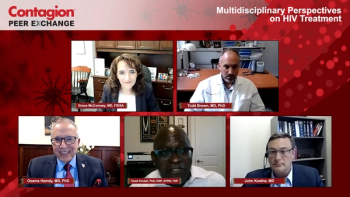
A multidisciplinary panel concludes a discussion on best practices for managing patients with HIV in various healthcare settings and overcoming social health disparities.
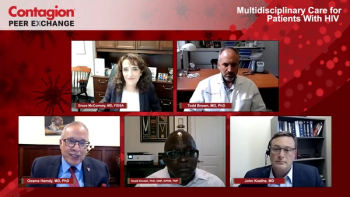
Drs Todd Brown and Osama Hamdy comment on various key players who help support patients with HIV.

Major predictors of response were CD4+ count, suppressed viral load, and whether the participant received the Moderna or Pfizer mRNA vaccine.

Mortality rates of children with HIV may be underreported due to lack of patient follow-up and the usage of routine program data.

Cabotegravir has a target date of January 24, 2022 and would become the first long-acting HIV PrEP therapy approved.

Importance of Appropriate Comparison Group for Assessing COVID-19 Outcomes of People Living with HIV
Research suggests studies should adjust their cohort comparison group to account for demographics most represented by people living with HIV.

The Fenway Institute is hosting its upcoming Advancing Excellence in Transgender Health conference. The program will include education on transgender medical care as well as how clinicians and people within this community can interact and the former can understand the latter’s needs when it comes to preventative and acute care.
England has been meeting and exceeding its HIV diagnosis and treatment goals set by UNAIDS.

Parentless youth living on the streets had the highest rates of HIV and death, but extended-family living situations were not necessarily better than institutional care.

The importance of establishing strong relationships with patients with HIV and expert advice on building rapport.
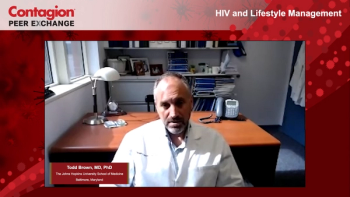
Lifestyle management interventions that can help patients with HIV on antiretroviral therapy manage their weight.
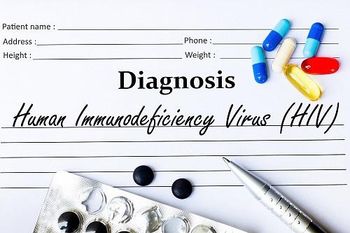
The therapy, known as EBT-101, works by eliminating HIV-infected DNA from the genome.

To address PrEP implementation in Kenya, a team of researchers evaluated practices and contextual modifications across public HIV clinics.
Advertisement
Advertisement
Trending on Contagion Live
1
Measles Update: September 25, 2026
2
US Company Recalls Thousands of Pounds of Uninspected Meat
3
Carbapenem-Sparing Therapy for ESBL Bacteremia: New Trials, Old Questions
4
Enivronmental Stewardship: The Role of Antimicrobials in Climate Change
5