




Vaccines
Latest News
Advertisement
Latest Videos








CME Content



































































































Advertisement
More News
In this month's column, we look at the recommendation changes made by the CDC to the pediatric vaccine schedule, as well as the American Academy of Pediatrics' response with its own vaccine schedule.

The federal agency is bringing over NIH Director Jayanta "Jay" Bhattacharya, MD, PhD, to fill the position.
Invivyd has aligned with the FDA on the design of a phase 3 trial evaluating the safety and immunology of the company's monoclonal antibody, VYD2311, vs mRNA COVID vaccines and in co-administration.

New real-world evidence presented by GSK shows its RSV vaccine, Arexvy, was associated with substantial reductions in RSV-related hospitalizations and serious cardiovascular and respiratory complications among older adults.

After initially refusing to review Moderna’s investigational mRNA-based seasonal influenza vaccine, the company communicated with the FDA on a revised proposal to seek approval and the federal agency will now review the product. The vaccine's PDUFA decision date is August 5, 2026.

Findings from a real-world population study from Spain show that universal infant immunization with Beyfortus significantly reduced RSV-related hospitalizations not only in the first RSV season but also into the second year of life.
This week, listen in on commentary around the potential removal of the COVID-19 vaccine from the US market, read about FDA's refusal to review Moderna's influenza vaccine, CDC's investigation on invasive E coli, and more.
The latest CDC numbers show a nearly 25% increase of measles cases from week-to-week. This marks 2 weeks in a row with a nearly identical increase of cases by percentage, and there are now 5 outbreaks circulating throughout the US.

New amicus brief from scholars and professional organizations including the American Thoracic Society and American Academy of Allergy, Asthma & Immunology supports AAP lawsuit against HHS changes to pediatric vaccine schedule.
The FDA declined to review Moderna’s mRNA flu vaccine application for its mRNA-1010 product, and based its decision on it choice of comparator in a phase 3 trial, despite the absence of safety or efficacy concerns and prior FDA agreement on the study design. Moderna requested a meeting to understand the path forward with the vaccine.
This week, listen in on commentary around the ongoing measles outbreak, read our new Antibiotics Deconstructed column on IV fosfomycin, review data on metformin preventing long COVID, insights on diagnostic stewardship, and more.
The latest CDC numbers show a significant increase week-to-week.
The Centers for Disease Control and Prevention (CDC) provided its latest figures today on the confirmed number of cases in the US.

The American Academy of Pediatrics (AAP) has published its 2026 immunization schedule, reaffirming routine vaccination to protect children and adolescents against 18 preventable diseases.
The workgroup is examining the vaccine’s schedule including the age it is administered, dosage, and the safety and efficacy of the vaccines.

Kirk Milhoan, MD, PhD, said vaccine choice is the most important element to the public even with the possibility of people contracting this disease or others when given the right to opt out of vaccination.
Although the declared COVID-19 pandemic public health emergency has passed, the CDC reports continued high numbers of illnesses, medical visits, hospitalizations and deaths.

Valneva has voluntarily withdrawn its US regulatory applications for its chikungunya vaccine, IXCHIQ, after the FDA suspended the license and placed the program on clinical hold pending investigation of a newly reported serious adverse event.
Evidence supporting the second of two licensed pentavalent meningococcal vaccines as an alternative to separate quadrivalent (ACWY) and serogroup B (MenB) vaccines is described and qualified in a recent MMWR.

The COVID-19 pandemic intensified long-standing problems in scientific production and communication—driven by perverse academic incentives, peer review strain, media hype, and growing misuse of AI—highlighting the urgent need for stronger critical appraisal skills across research and medicine.
This week, listen in on commentary around the changes to the childhood vaccine schedule, read SIDP's column on the next-generation antifungals as well as combination therapeutics for Candida auris, and the Clinical and Laboratory Standards Institute Subcommittee on Antimicrobial Susceptibility Testing breakpoint recommendations.

With rates of influenza vaccination in decline, two health systems evaluated interventions for prompting clinicians to order, and patients to obtain flu shots.
New federal guidance recommends childhood vaccines for 11 diseases, downsizing immunization protection from the previous list of 18 diseases.
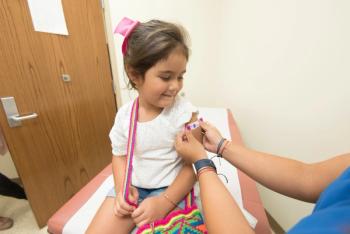
A delay in providing standard infant vaccinations is associated with children not receiving MMR (measles, mumps, rubella) vaccine by 2 years of age.
A series of politically driven actions in 2025—including defunding mRNA research, dismantling vaccine advisory bodies, and restricting CDC recommendations—has undermined US vaccine access and pandemic preparedness, but professional societies and some states are stepping in to preserve evidence-based public health.
Advertisement
Advertisement
Trending on Contagion Live
1
Ceftriaxone Safety: Separating Signal From Risk
2
A Pennsylvania Teen Dies From Rare Measles Neurological Complication
3
New Diagnositics for Legionella Pneumonia May Streamline Care Continuum
4
Revisiting Whether Cefepime Raises Mortality Risk
5