


Zoonotic & Vector-Borne Diseases
Latest News
Advertisement
Latest Videos

























































































































































Advertisement
More News

Leonard Sigal, MD, explains his approach for treating patients who may have “Lyme anxiety.”

The results of a new CDC Morbidity and Mortality Weekly Report revealed that in US states and territories with local Zika virus transmission, the prevalence of Zika-related birth defects is increasing.
A total of 22 cases of yellow fever have been confirmed in Minas Gerais since July 2017 and 15 of those individuals have died.

The World Health Organization (WHO) has recommended visitors to Sao Paulo, Brazil, should consider getting the yellow fever vaccine before visiting.

Leonard Sigal, MD, explains the term “Lyme anxiety” and its association with a chronic Lyme disease diagnosis.

New research suggests that the rhesus macaques residing in a popular Florida park should be considered a public health concern, as they harbor a virus that can be deadly if transmitted to humans.

The Marburg virus, a rare, but serious filovirus virus, is a zoonotic virus in which outbreaks are frequently triggered by interaction with the African fruit bat, Rousettus aegyptiacus.

Leonard Sigal, MD, explains the potential adverse consequences of long-term antibiotic therapy.

How many of those who recovered from WWI-associated infections had residual neurological impairments that increased their risk for violence?

Check out the top 10 infectious disease articles of 2017.
We’ve rounded up the 10 biggest infectious disease outbreaks of 2017.
Leonard Sigal, MD, explains why Lyme disease is sometimes overdiagnosed or overtreated.
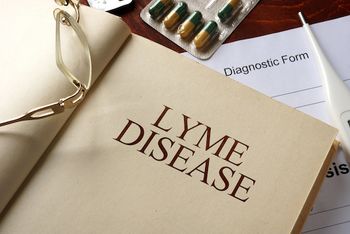
It was a big year for Lyme disease on Contagion®, with coverage of advances in early testing and other diseases that may be linked with the disease, to a panelist of experts debating the existence of chronic Lyme disease in our first-ever Peer Exchange® panel.

Herewith, 4 New Year’s resolutions for the infectious disease community—at least according to us here on the Public Health Watch.

In case you missed them, we've compiled the top five infectious disease articles from this past week.

Robert Bransfield, MD, DLFAPA, explains how psychoneuroimmunology can work to bridge the gap between psychiatrists and infectious disease physicians to improve patient care.

The first step in global health security is prevention, but how does it work against a diverse range of threats?

The expansion in tick populations has led to an increased risk of infection for humans and animals with both established tick-borne agents and newly recognized ones, creating a serious One Health problem.

In case you missed them, we've compiled the top 5 articles from this past week.

The US Department of Health and Human Services Tick-Borne Disease Working Group held its first public meetings in Washington, DC, this week and it has already generated plenty of eye-grabbing headlines.
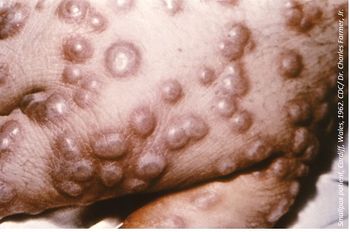
Although deemed eradicated throughout the world in 1980 thanks to a protective vaccine, research on smallpox continues to this day given the potential for the highly contagious virus to be used in biological warfare.

Stay up-to-date on the latest infectious disease news by checking out our top 5 articles of the week.

Robert Bransfield, MD, DLFAPA, discusses direct methods that can be used to acquire statistics related to suicides that are a result of Lyme and associated diseases.

Experts from academia, industry, and public health agencies—including the Centers for Disease Control and Prevention and the US Food and Drug Administration—discuss the new generation of antibody tests.

Questions regarding a finance executive’s expertise in infectious diseases aside, the move seems straightforward enough—at least on the surface.
Advertisement
Advertisement
Trending on Contagion Live
1
Cefiderocol-Xeruborbactam Active Against Carbapenem-Resistant Bacteria
2
Pritelivir Cuts Hospital Days in Refractory HSV in Phase 3 PRIOH-1
3
Zelicapavir Shortens RSV Symptoms Despite Missing Primary End Point
4
Measles Update: October 23, 2026
5