






Antibiotics
Latest News
Advertisement
Latest Videos
























































































































































Advertisement
More News
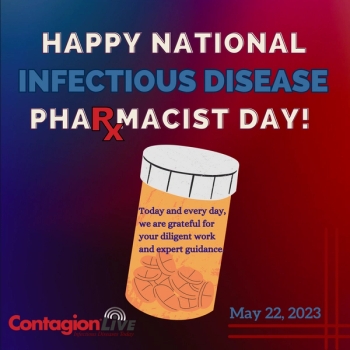
Today, we celebrate the crucial role of infectious disease pharmacists in combating infectious diseases and promoting patient safety.

The mandatory reporting of Antimicrobial Use and Resistance (AUR) by hospitals participating in the CMS Medicare Promoting Interoperability Program beginning next year is a important strategy in curbing the overuse of antibiotics.

A clinician presents data on this antibiotic for these troublesome infections at the ongoing MAD-ID conference.
Sulbactam-durlobactam is efficacious against carbapenem-resistant infections, and Innoviva is preparing for the antibiotic's PDUFA at the end of this month.
Antifungal therapy was frequently initiated before essential diagnostic elements confirmed invasive fungal infections in critically ill COVID-19 patients.
Outpatient parenteral antimicrobial therapy (OPAT) offers benefits for patients as well as providing cost effectiveness; however, it is not without its challenges. Two clinicians provide insights on this modality.
The WHO issued its first ever list of priority antibiotics for pediatrics to encourage research and development targeting needs of that population.

Members of both branches brought it back to gain support and passage of a bill aimed at greater development of antibiotics.

A paradigm shift is emerging when it comes to the clinical approach to prescribing antibiotics. One clinician weighs in on using this class of therapeutics more judiciously.

By addressing ART-related medication errors and increasing linkage to care, antiretroviral stewardship programs can improve management of inpatients with HIV.

This was the first study to compare clinical outcomes in carbapenemase-producing (CP-CRE) and non–carbapenemase-producing (nCP-CRE) infections.


The FDA’s Antimicrobial Drugs Advisory Committee (AMDAC) voted 12-0 in favor of recommending this antibiotic and sets up a PDUFA target action date of May 29.

With an FDA approval, it would be the first new class of oral antibiotics for uncomplicated urinary tract infections (uUTI) in over 20 years.

Several years after its FDA approval, this antibiotic continues to prove its efficacy in vitro across various pathogens related to these infections.

Alita Miller, PhD, senior vice president of research at Entasis Therapeutics, discusses positive trial data for Sulbactam-durlobactam (SUL-DUR) slated to be presented at ECCMID 2023.

Catch up with this week's 5 most-read infectious disease stories.

With limited amounts of antibacterials, prescribers are presented with optimal therapy challenges as well as difficulties in trying to achieve stewardship.

Reducing unnecessary antibiotic prescriptions for viral upper respiratory tract infections is crucial to stop the spread of antimicrobial resistance.

2 CDI recurrences occurred in this study, both in placebo recipients who were immunocompromised.
According to the CDC, the outbreak strain of carbapenem-resistant Pseudomonas aeruginosa with Verona integron-mediated metallo-β-lactamase and Guiana extended-spectrum-β-lactamase (VIM-GES-CRPA), has never been reported in the US prior to this outbreak.

Increased sales of these antibiotics during the COVID-19 pandemic raise concerns about the growing threat of antimicrobial resistance.
"Antibiotics can safely be withheld in most patients with viral respiratory infections,” these study authors wrote.

An intensive care physician offers some insights looking at fluoroquinolone-associated tendinopathy and using this social media platform to provide education and an open discussion around it.
This week's hottest topics included the risks of proton pump inhibitors, rare tickborne disease, HIV vaccination, COVID-19 immunity from a common cold, and hydrocortisone for pneumonia.
Advertisement
Advertisement
Trending on Contagion Live
1
Early Dual Therapy Shortens Staphylococcus aureus Bacteremia in SABEDTIO Trial
2
Pritelivir Cuts Hospital Days in Refractory HSV in Phase 3 PRIOH-1
3
Cefiderocol-Xeruborbactam Active Against Carbapenem-Resistant Bacteria
4
Ebola Update: DRC Outbreak Reaches 9735 Cases, Second Largest on Record
5