





















































































































































Massive vaccination campaigns launched in Brazil and Nigeria strive to quell ongoing outbreaks.
Massive vaccination campaigns launched in Brazil and Nigeria strive to quell ongoing outbreaks.

Providing investments in 10 vaccines during a 15-year period in low- and middle-income nations could prevent 36 million deaths and 24 million cases of poverty related to medical reasons.

Although rare, children inoculated against chicken pox can present with herpes zoster at or near the vaccination site.

A panel of experts from the Philippines Department of Health finds that Sanofi Pasteur's dengue fever vaccine, Dengvaxia (CYD-TDV), may be connected with 3 deaths.

Influenza A (H3N2) has caused most of the illnesses in this severe flu season, but influenza B is becoming increasingly responsible for more infections as the flu season continues to hit the United States.
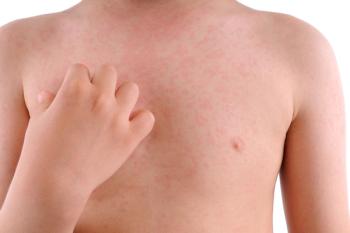
A Nebraska mother’s Facebook post has parents and health experts around the country wondering if an influenza B infection may have caused hives in a child who did not present with any other flu symptoms.

In case you missed them, we've compiled the top five infectious disease articles from this past week.
The CDC’s acting director provides a somber flu update and stresses the need to stay vigilant against the virus.
Despite a new report indicating that the flu vaccine hasn’t been very effective in North America this year, health officials say it’s still a valuable weapon against this severe flu season.
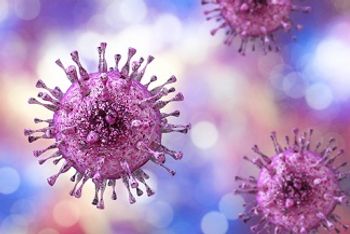
The vaccine candidate is ASP0113, which was in development to treat and prevent cytomegalovirus (CMV) in hematopoietic stem cell transplant recipients.
Findings from a new National Institutes of Health study may have important implications for flu vaccine development.
Richard Haupt, MD, MPH, explains why it’s harder to cover adults rather than children when it comes to vaccination.

With about 1 million individuals getting herpes zoster each year in the United States, the best protection against the virus is vaccination.

The FDA grants Fast Track designation to TAK-426, Takeda’s purified, inactivated, alum-adjuvanted whole Zika virus vaccine candidate.

As flu cases continue to rapidly increase this season, school districts around the country have taken to closing schools in order to prevent the spread of the virus.
William Schaffner, MD, explains what we can expect for the 2017-2018 flu season and how clinicians can ensure their patients get vaccinated.
A new data analysis suggests that individuals born at the time of a flu pandemic are more susceptible to death in future pandemics.
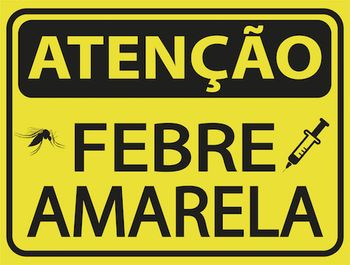
A total of 22 cases of yellow fever have been confirmed in Minas Gerais since July 2017 and 15 of those individuals have died.
Richard Haupt, MD, MPH, discusses what is needed to ensure that a future C. diff vaccine is adequately stocked and delivered to wherever individuals show up for vaccination.

The World Health Organization (WHO) has recommended visitors to Sao Paulo, Brazil, should consider getting the yellow fever vaccine before visiting.
The Centers of Disease Control and Prevention (CDC) held a recent briefing on flu season as 49 states report widespread flu activity.

The New Jersey Department of Health issued a public health alert, warning of potential measles exposure at Newark Liberty International Airport.

GlaxoSmithKline has announced that the FDA's Center for Biologics Evaluation and Research has approved expanding the indication for their influenza vaccine to include use in those 6 months of age and older.
Health officials across the United States have their hands full as hepatitis A cases continue to spring up.
Richard Haupt, MD, MPH, discusses what would be required to adequately implement the delivery of a future C. diff vaccine.